

Sample report, invented student
Layla A.
High creativity
8.4/ 10NEOMI score
Strongest skillImagination
Most room to growOriginality
 by Just to Learn
NEOMI measures and grows creativity. An AI-scored test shows where each learner stands, and for children aged 6 to 12, a hands-on programme with augmented reality and 3D printing helps them grow.
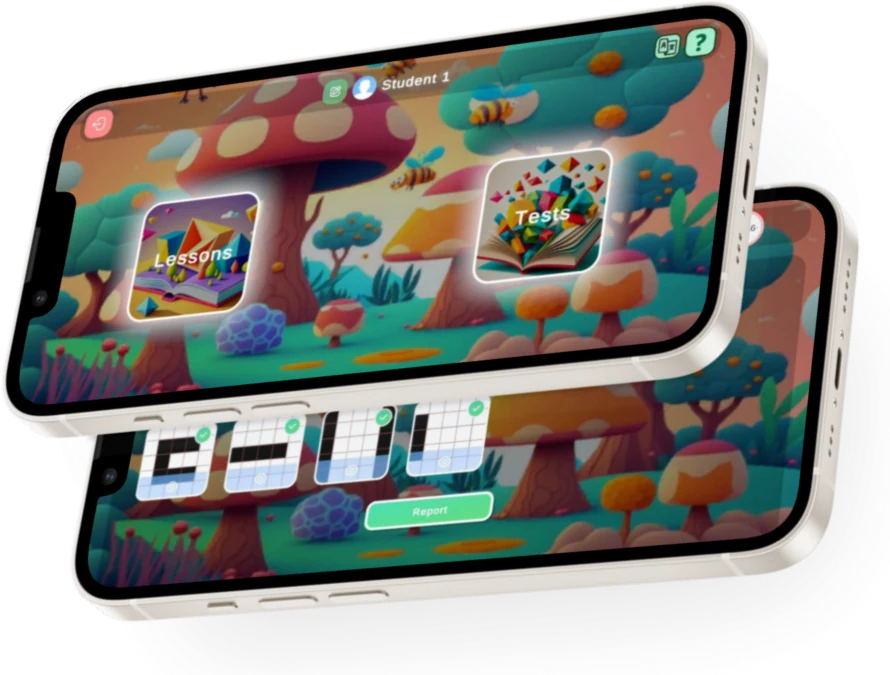
Buy the test on its own, or run the full programme with the test built in.
For schools, universities, ministries and companies
Short creative tasks scored by AI, with instant results and reports from each learner up to class, school and region.
For schools, ages 6 to 12
The test before and after, with a hands-on STEAM studio in between: students design, test their ideas in AR and 3D-print them.
You can start with the test and add the programme later. The second test then shows what changed.
Short creative tasks, scored by AI, with instant results and reports for every student, class, school and region. A rapid version is available when time is short. Schools, universities, ministries and companies can use it on its own or as part of the programme.
Every student gets a five-page report. This is page one for an invented student, to show the format.
One NEOMI score out of 10, a creativity level and the student’s place in the class.
Each skill compared with the class, with a plain-language explanation.
A class map that groups students as deep thinkers, idea generators, well-rounded or building up.
One personal recommendation for each skill.
Time spent per task and per idea against the class, with original ideas marked.
Sample report, invented student
Layla A.
High creativity
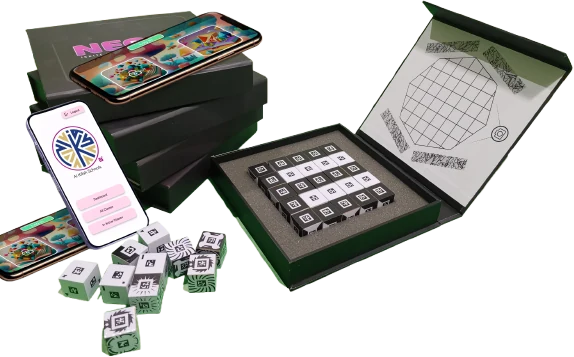
An AR-based STEAM studio. Students take on challenges that mix science, technology, engineering, art and maths, design their answers, test them in augmented reality and bring the best ones to life with 3D printing.
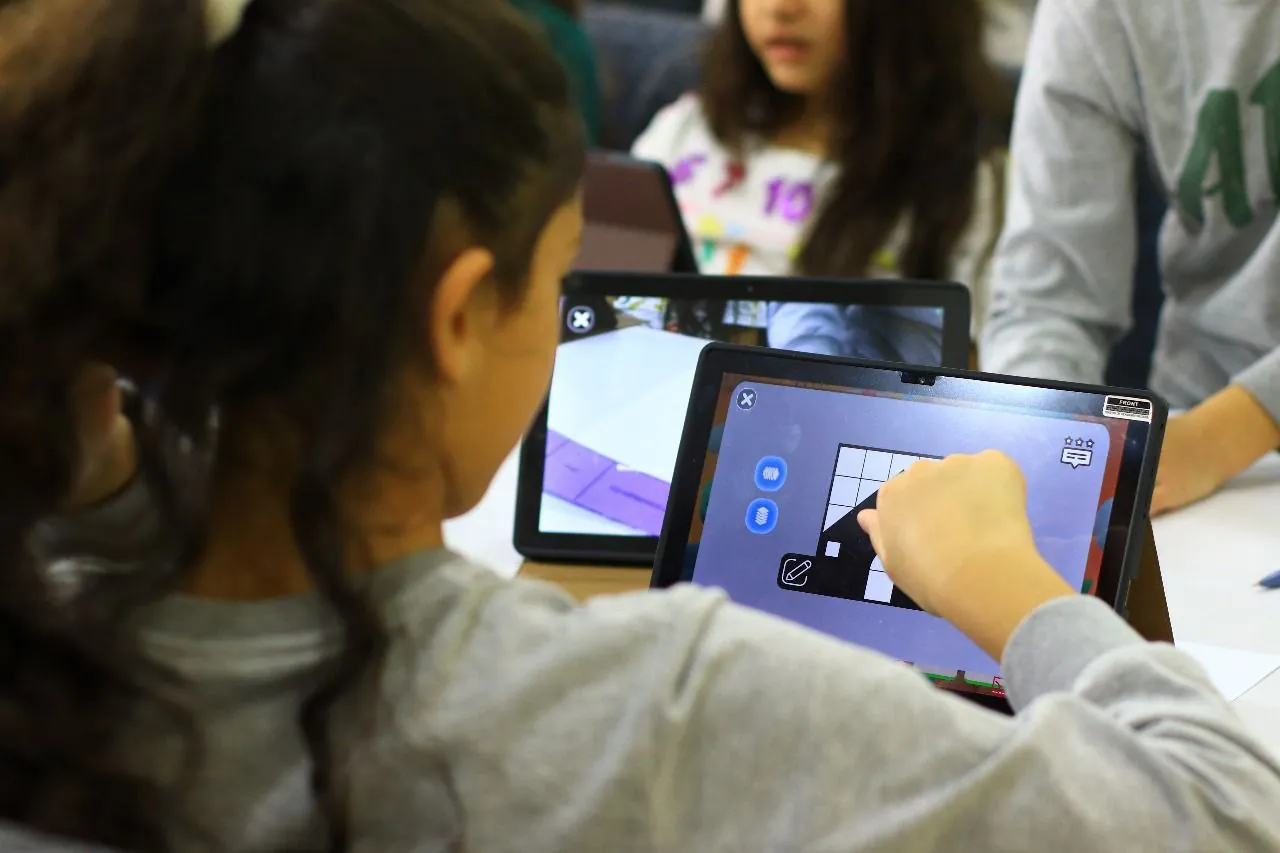
Basic shapes on a 5 × 5 board and in the app.
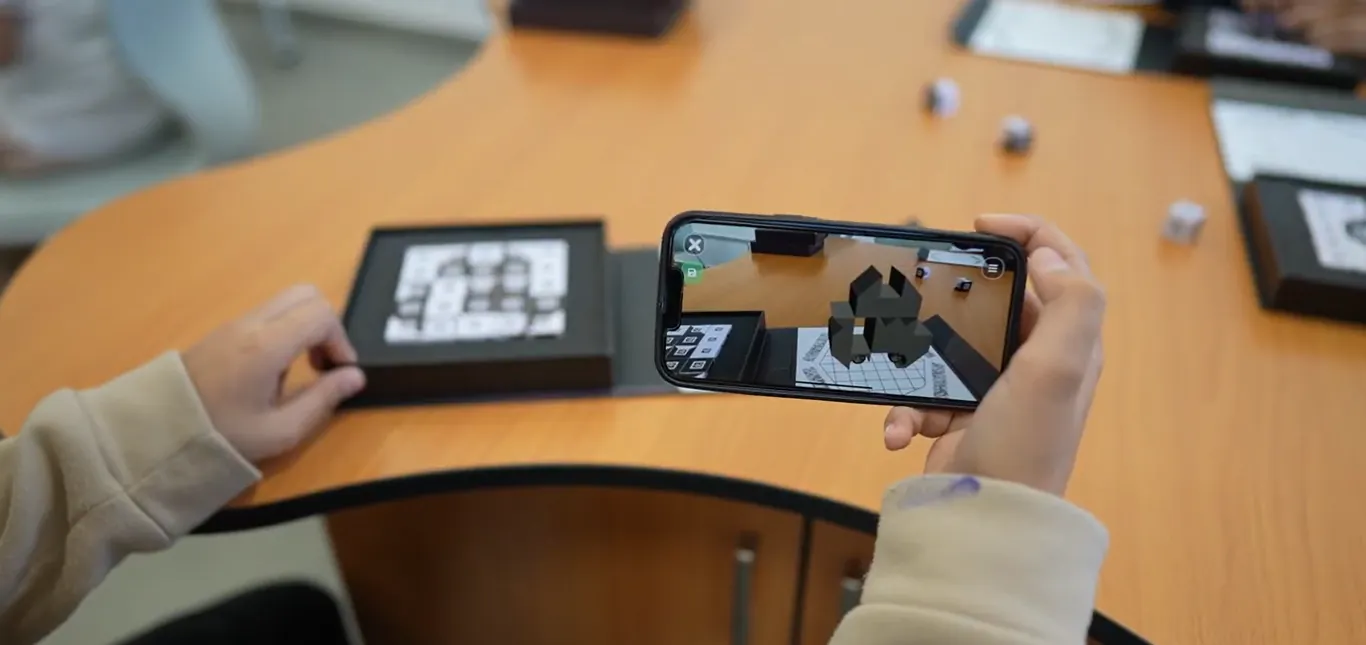
A 3D model to walk around, judge and improve.
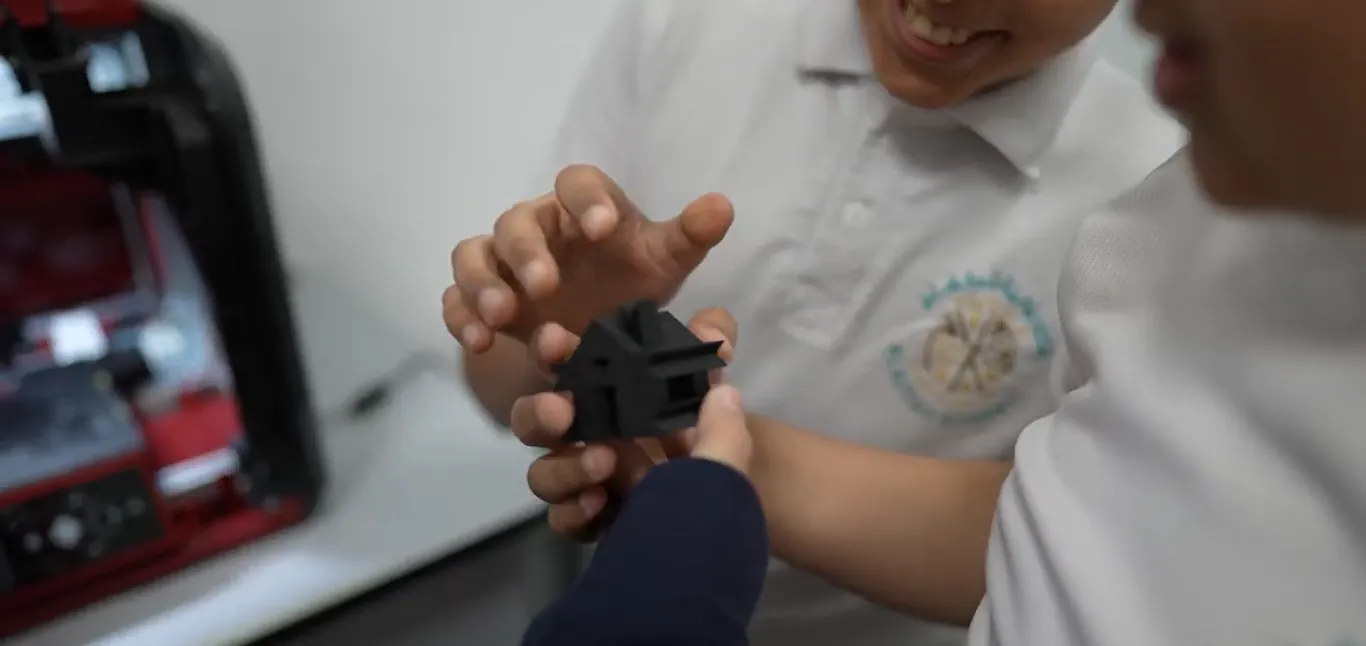
The idea becomes an object.
Every NEOMI programme starts and ends with the test, so a school sees in numbers what changed. This is what it showed at Al Kifah Academy.
Bring the programme to your school+56%higher average creativity score after the programme: from 72 to 112.
| Before the programme | 72 |
|---|---|
| After the programme | 112 |
More than 200 students in grades 6 to 9 took the test before and after the programme in 2023. The whole curve shifted to higher scores, not just its top end.
Study by Just to Learn with Al Kifah Academy. The curves are redrawn from the study’s chart.
Children are surrounded by screens but rarely use them to make anything. NEOMI’s challenges mix science, technology, engineering, art and maths, so students learn to think critically, solve problems creatively and connect ideas across subjects. It’s not about memorising. It’s about exploring, experimenting and making.
Art gives children a space to explore, express themselves and take risks without fear. They can try, make mistakes and make something of their own, and share complex ideas in a simple way.
Children see their ideas in 3D straight away, which makes abstract ideas easier to grasp. Because smartphones are everywhere, even in low-income areas, AR can reach almost any school.
AI scores each child’s creative thinking, recognises the shapes they build and helps match activities to their strengths, tracking progress along the way.
The last step. Students hold their idea in their hands as a real model, link ideas to results and start to see themselves as real makers.
Two traditions shape how NEOMI measures creativity, and three shape how it grows it.
The student app runs on iOS and Android, with a web version for computers. Teachers have their own app and portals.
Book a demo and we’ll walk you through the test, the report and the programme.